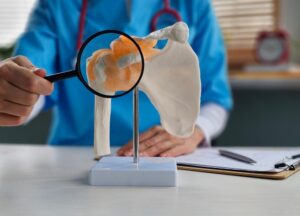

The shoulder’s wide range of motion makes it vulnerable to injury, particularly to the labrum—the ring of cartilage that helps stabilize the shoulder joint. A labral tear can result from trauma, repetitive overhead movements, or gradual wear and tear, and is a common cause of ongoing shoulder pain and instability.
Signs of a Labral Tear
Labral tears don’t always cause immediate symptoms, but many patients report:
- Deep shoulder pain, especially with movement
- A clicking, catching, or popping sensation
- Shoulder weakness or instability
- Pain with overhead activities or lifting
Left untreated, labral injuries can make the shoulder more prone to repeated dislocations or further soft tissue damage.
Accurate Diagnosis Is Key
Because labral tears can mimic other shoulder conditions, proper evaluation is essential. Dr. Koo combines a detailed physical exam with advanced imaging to accurately identify the source of pain and develop a personalized treatment plan.
Personalized, Minimally Invasive Care
Treatment depends on the severity of the tear and the patient’s activity level. Conservative options such as physical therapy and activity modification may be effective for some patients. When surgery is necessary, arthroscopic labral repair allows Dr. Koo to address the injury through small incisions while restoring shoulder stability and function.
Focused on Long-Term Shoulder Health
Dr. Koo’s goal is not only to relieve pain but to help patients return to daily activities with confidence and comfort. By addressing shoulder injuries early and using the least invasive approach possible, patients can protect their shoulder strength, mobility, and quality of life.